
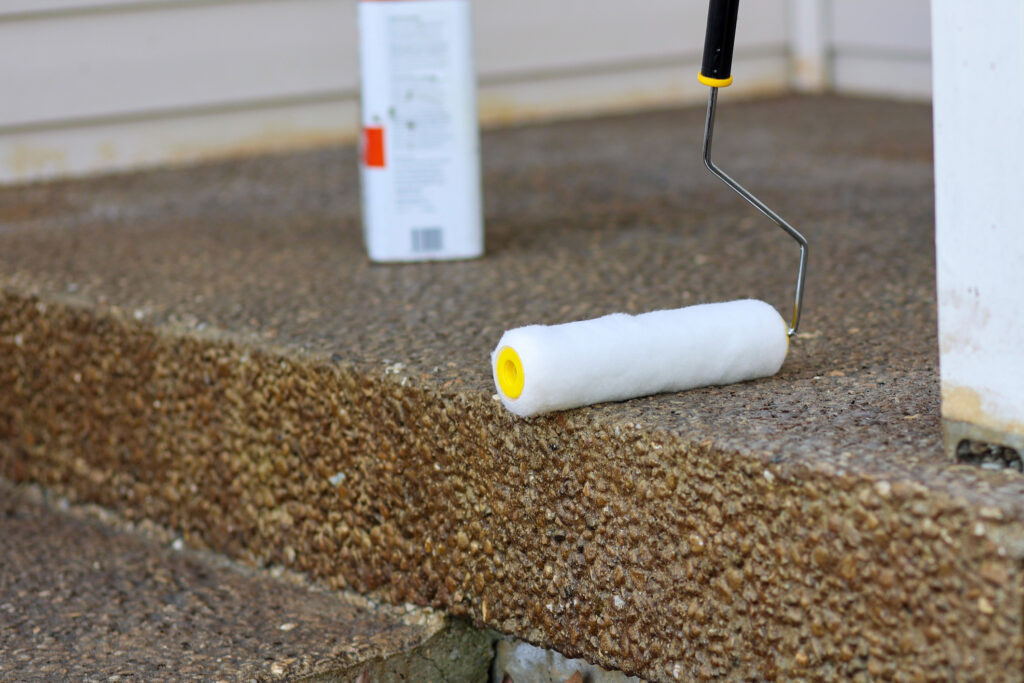
Concrete staining and sealing can dramatically improve the look and durability of a surface—but the same approach does not work equally well in every setting. Interior concrete floors face very different conditions than exterior patios, walkways, or driveways. Choosing the right stain and sealer combination based on where and how the concrete is used is essential for long-term performance.
Understanding these differences helps property owners avoid premature wear, disappointing finishes, and unnecessary rework.
Interior Concrete: Focus on Appearance and Wear Resistance
Interior concrete surfaces are protected from weather but experience consistent foot traffic, furniture movement, and daily use. In these spaces, aesthetics and abrasion resistance are often the top priorities.
Penetrating concrete stains are ideal for interior applications because they create rich, dimensional color that becomes part of the concrete itself. Unlike surface coatings, stains won’t peel or flake under normal use. For sealing, a clear sealer with a satin or low-sheen finish is typically recommended. This enhances color while providing protection against spills, scuffs, and routine wear.
High-gloss finishes are rarely ideal indoors unless the space is specifically designed for it. Over time, gloss levels can show scratches and wear patterns more clearly, making maintenance more noticeable.
Exterior Concrete: Durability Comes First
Exterior concrete faces constant exposure to sun, moisture, temperature changes, dirt, and foot or vehicle traffic. Because of this, exterior applications demand a different approach.
Stains used outdoors must be UV stable to prevent fading. Penetrating stains perform well in exterior environments because they won’t blister or peel when exposed to the elements. Sealing is especially critical outdoors, as unsealed concrete is highly absorbent and vulnerable to water intrusion, staining, and surface breakdown.
A properly selected exterior sealer helps reduce moisture absorption, resist abrasion, and protect against environmental wear without creating an overly glossy surface that can dull unevenly over time.
Why One-Size-Fits-All Products Fall Short
Many off-the-shelf concrete products claim to work everywhere, but real-world conditions tell a different story. A sealer that performs well indoors may break down quickly outdoors. Likewise, products designed for exterior durability may not deliver the refined appearance desired inside.
Professional evaluation considers:
- Surface location and exposure
- Traffic type and frequency
- Desired appearance and finish
- Long-term maintenance expectations
Skipping this analysis often leads to coatings that look good initially but fail to perform over time.
The Role of Surface Preparation
Whether interior or exterior, surface preparation is critical. Stains and sealers rely on proper surface conditions to bond and perform correctly. Residue, moisture issues, or previous coatings can all affect results.
Professional preparation ensures the concrete is ready to accept stain and sealer evenly, which directly impacts both appearance and durability.
Balancing Protection and Maintenance
A well-chosen stain and sealer combination not only protects concrete but also simplifies maintenance. Interior surfaces become easier to clean and maintain, while exterior surfaces resist staining and weather-related damage more effectively.
The goal is not just immediate visual improvement, but long-term performance that reduces the need for frequent touch-ups or reapplication.
Professional Guidance Makes the Difference
Choosing the right products for concrete isn’t about picking what looks best on a shelf—it’s about matching materials and techniques to real-world conditions. At Fuller Concrete Staining, concrete staining and sealing solutions are tailored to each surface’s location, use, and performance requirements.
If you’re considering staining or sealing interior or exterior concrete surfaces, contact Fuller Concrete Staining at 310-944-9099 to get expert guidance and long-term results you can rely on.